
2026-10-08 · Marcus Thorne
How Hard Water in DeSoto Accelerates Water Heater Corrosion
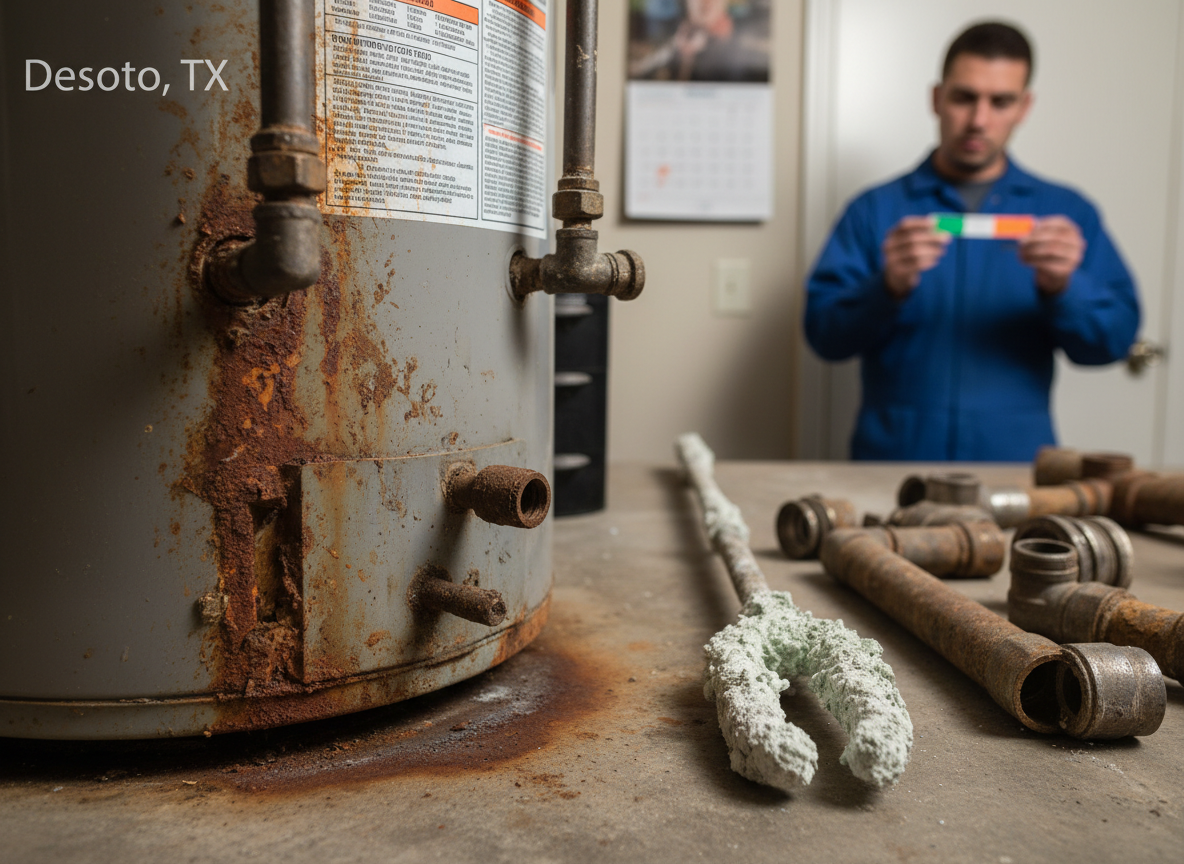
Hard water in DeSoto, a common reality across Dallas County, significantly shortens the lifespan of residential water heaters, often reducing their operational life from the typical 8–12 years down to 5–7 years due to accelerated corrosion. This is primarily due to the high mineral content, particularly calcium and magnesium, dissolved in our local water supply. These minerals don't just leave unsightly spots on dishes; they actively work to degrade the internal components of your water heater, leading to premature failure and, eventually, leaks. For homeowners in areas like Downtown DeSoto and North DeSoto, recognizing the impact of hard water is the first step in protecting their investment and avoiding the sudden inconvenience of a leaking water heater.
Understanding Hard Water and Its Impact
Hard water is characterized by a high concentration of dissolved minerals, primarily calcium and magnesium. While these minerals are not harmful to consume, they can be incredibly detrimental to plumbing systems and appliances that heat water. When water is heated, these minerals precipitate out of the solution, forming a hard, crusty deposit known as limescale. This limescale acts as an insulating layer inside your water heater tank and on heating elements, forcing the unit to work harder to achieve the desired water temperature. This increased workload not only drives up energy bills but also puts added stress on the system, accelerating wear and tear.
Beyond the insulation effect, limescale also contributes directly to corrosion. The mineral deposits can create an uneven surface inside the tank, leading to localized electrochemical reactions that eat away at the metal. This is particularly problematic for the glass lining inside most water heater tanks, which, once compromised, exposes the steel underneath to direct contact with water and minerals, rapidly accelerating the corrosion process. This is why residents in DeSoto and nearby cities like Duncanville and Cedar Hill often experience water heater issues sooner than those in areas with softer water.
How Limescale Accelerates Corrosion
The process of limescale accelerating corrosion in a water heater is multifaceted. First, as mentioned, the scale itself can be corrosive. Certain mineral compounds, when heated and concentrated, can become mildly acidic or alkaline, creating an environment that promotes the breakdown of metal. Second, limescale can trap moisture against the tank's inner walls, preventing the protective anode rod from effectively doing its job. The anode rod is designed to corrode sacrificially, drawing corrosive elements away from the tank's steel. However, if it's covered in scale or if scale prevents water from circulating freely around it, its protective capabilities are severely diminished. This leaves the tank vulnerable to pitting and rust, which are direct precursors to a <a href="/services/water-heater-tank-leak-repair">water heater tank leak</a>.
Furthermore, the buildup of sediment and scale at the bottom of the tank creates a barrier that can trap heat. This can lead to localized overheating of the tank's bottom, causing the metal to expand and contract excessively. Over time, this thermal stress can weaken the tank's structure, leading to hairline cracks and eventual leaks. This is a common scenario we observe in older homes in North DeSoto, where years of hard water exposure have taken their toll on original water heater installations.
Signs Your DeSoto Water Heater is Suffering from Hard Water
Identifying the signs of hard water damage early can help you address the issue before it leads to a catastrophic leak. As a homeowner in Dallas County, it's wise to be vigilant for these indicators:
- Reduced Hot Water Capacity: If your water heater isn't producing as much hot water as it used to, or if it runs out quickly, it could be due to sediment and scale buildup insulating the heating elements or taking up space in the tank.
- Strange Noises: Popping, rumbling, or banging sounds coming from your water heater are often caused by sediment at the bottom of the tank. As the heating element attempts to heat the water, it also heats the trapped sediment, causing water to boil beneath the deposits and create steam bubbles that burst.
- Cloudy Water or White/Greenish Stains: While not directly a sign of corrosion, cloudy water or mineral deposits around faucets and showerheads are clear indicators of hard water, which is the root cause of the corrosion problem.
- Increased Energy Bills: A water heater struggling with limescale buildup has to work harder and longer to heat water, leading to noticeable increases in your utility costs.
- Visible Leaks: Ultimately, the most definitive sign is a leak. If you notice water pooling around the base of your water heater, it's often a sign that corrosion has finally compromised the tank. For immediate guidance, you can refer to our article on <a href="/blog/step-by-step-guide-to-temporarily-stopping-a-water-heater-leak">temporarily stopping a water heater leak</a>.
Mitigating Hard Water's Effects and Preventing Leaks
While you can't change DeSoto's water supply, you can take proactive steps to minimize the impact of hard water on your water heater. Regular maintenance is paramount: